The “Lupo” Battalion of the Xth MAS Flotilla on the Gothic Line, 1944-1945
By Andrea Lombardi
Among the
various fighting units of the Armed Forces of the Repubblica Sociale Italiana[1]
to be used effectively at the front against the Allies[2],
a unit that distinguished itself for military efficiency and courage was
certainly the “Lupo” Battalion of the Xth MAS[3].
One of the first Marine Infantry Bns of the Xth MAS to be formed, the Lupo Bn was
formed in January 1944 and organized on three Rifle Companies, a Heavy Weapons
Company, and a HQ Company. Its commander was Captain Corrado De Martino, a
decorated submarine commander, assisted by Lieutenant Dante Stripoli, a Black
Shirt Bn veteran. After a training period with the Division "Hermann
Goering", during which the Marò (Marines) learned the combat tactics of
the German Infantry (even if the initially delivered weapons turned out to be
the usual old Royal Italian Army ordnance - rifles and moschetto '91s, the
unreliable Breda 30 light machine guns...), the “Lupo” was sent to Piedmont
with garrison and counterinsurgency duties, taking part in the recapture of the
town of Alba, seized by the partisans. The Bn was also resupplied in this
period with the excellent MAB 38A SMGs, the accurate Breda 37 heavy machine
guns, and numerous “war booty” Sten SMGs, recovered from Allied airdrops to the
partisans.
Eventually, at the end of 1944 came the most desired order: the departure
to the “Fronte Sud” (“Southern Front”), on the Gothic Line, against the Allies.
On 4 December, the “Lupo” went from Milan to the Apennines, digging in on the
slopes of the Reno River Valley, only to be sent in the plain along the river
Senio, between Fusignano and Alfonsine.
The Bn was organized at the time on
three Rifle Coys, a Mortars Coy (four Model 35 81 mm mortars), a AA Coy (with
nine Breda 20 mm AA Guns), plus the HQ Coy, with a force of 25 officers, 65
NCOs, 600 Marò and 10 Women Auxiliary of the “Servizio Ausiliario Femminile
della Xa MAS”
So began two long months of trench warfare,
where the fortified positions along the high banks of the river, subject to
incessant Allied shelling, strafing and bombings, and attacks by Allied combat
patrols and TDs and tank direct fire, were fiercely defended by the “Lupo” Bn
Marò and the adjacent German units, including the 16. SS-Panzergrenadier-Division Reichsführer-SS. The cooperation among the very young
Marò and the elements of this elite unit, after the first initial conflicts and
misunderstandings, was excellent, and if the Marò were impressed by the
training and the military equipment of the Germans, the Reichsführer’s
Waffen-SS learned to admire the courage displayed by the Marò in their
continuous no man's land patrols, repeated almost every night, against the
Canadian and British advanced positions in front of the river banks, usually
placed in houses transformed into true fortresses bristling with Bren and other
automatic weapons and surrounded by mines and booby traps, and during the day
resting points for snipers. Here are some “oral history” examples of these
actions.
A Sherman blows up
Marò Luigi Sitia, Lupo Bn,
January 1945
Our 3rd Company is located on the bank for
several days: it is just after midnight – it’s New Year's Eve - and we are
preparing for the first sortie. We will work together with a German team.
In a dilapidated house set against the banks of
the Senio we expect the time of attack, trying to doze, while the Krauts are
delousing themselves with enthusiasm. They are have been in the front line for
months and months, and their faces are haggard: war has dug deep furrows. Suddenly,
the door opens and three of them burst in, each bringing four tins of steaming
spiced wine. "Hier,
Kamaraden! Hier zu trinken! Be big party diese Nacht ".
Poor soldiers. In their eyes shines a fierce
longing of their homes. "Heute party, party... Wir trinken! "
And all together we drink, then a Teutonic
choir rises a slow, soft, sad.
"Silent Night, Holy Night ... '
"Stand up! Check your weapons! "
Now is the Lieutenant with a German officer,
the order takes the chill in my bones. We almost did not realize where we are
and what we are doing. The Germans have stopped deloused and prepare to go.
Fifteen minutes later we lined up in the yard.
Unfazed, the yellow disc of a huge moon is reflected on our helmets. Bad night
to go on patrol. Then our Lieutenant says:
"The action is simple. A group of houses
here in front is occupied by the Canadians. We have to dislodge them. Attention
to where you lay your feet: the ground is almost completely mined. Put them
exactly where the fellow in front has stepped and do not lose contact. We will
then open to the right and the Germans left. In bocca al lupo! (Into the mouth of the Wolf!)"
We pace slowly to the bank, then we are over
it: we are in no man's land. Cautious and wary as beasts of prey, we creep
along the rows of plants. Every now and then a stop, the two officers shall
consult. There in front of us a group of ruins where "they" are
waiting for us. The march resumes. I am the last in line behind the Italians
and with me is a huge German sergeant. Every once in a while we crouched behind
a tree waiting for the order to continue, I try to talk, but he grunts and
motion me to be silent. Then, in one breath hisses:
"Shut up! Inglesi ears are near! "
Finally the order came as a blow, battle
formation! We expand like a fan, Italians and Germans on the right and left.
The ruins of the houses rise to no more than fifty yards, and we crawl on the
ground, completely without cover.
I'm afraid, and I expect the first burst from
moment to moment... Here, a detonation between the houses and tracers shave our
heads. Now comes the rest, I think, as a new order is breathed:
"Ready hand grenades! Ready to shoot!
"
But there is no more firing.
We continue to move forward on our elbows ...
thirty feet, twenty, fifteen ... now we clearly distinguish every detail of the
crumbling walls. Two shadows now raise from the ground, they are the German
lieutenant and my sergeant: like wolves disappear in a few leaps in the rubble
while my heart is leaping. We remain nailed to the ground, mouth dry and the
hands contracted nervously on the weapon.
The shadows reappears. Now we begins to
understand: the Canadian garrison slipped away, perhaps he had orders not to
look for trouble, or may have feared an attack in force. On the table still
smoke the butts of two Morris cigarettes, clothing and blankets piled up
against the wall.
We reassembly and we are taking a breather when
a gloomy drone strikes, a German rushes and began talking excitedly with his
officer. Alarm! Here come the tanks!
Quickly, we emerge from the house and we take
position on the destroyed village’s edge.
I remember with fear the war documentaries and
scary scenes of the advancing Panzers grinding everything: trees, walls, human
bodies. On the white moonlit night two enormous steel pachyderms moves
cautiously ... behind, of course, there are the infantry. The two behemoths
stop at fifty yards: we do not see anyone behind them, at least for the moment.
Here, one of the “wagons” resume noisily its
advance and is right upon us. At a distance of twenty meters follows the other.
Weapons in hand, crouched among the rocks and
rubble we stand fast: two shadows glide along the rows of bushes to meet the
advancing monsters. The first tank has stopped again and we see clearly the
details, its cannon is moving...
And behold, a blue flame streaks from the earth
and a deafening roar explodes and echoes, sudden clouds of white sparks fly
from the tank; a few seconds of maximum tension and the whole tank disappears
in smoke and flame, a piercing roar split the air. The young Marò Alberto Bellagamba’s
Panzerfaust has hit the mark!
The other Sherman retreats quickly, randomly
shelling the ruins behind where we are hiding. At the same time the entire
Canadian line wake up, shooting at us with all guns. Mortar fire rains the
first phosphorous shells. We retreat back to our position.
What satisfaction when we feel again under our
boots the ground of the yard where we started! While around us automatic
weapons fires off the last rounds, we - Italians and Germans, officers and men
- all embrace Alberto the hero of the day, or night.
Destroy the outpost
Lieutenant Spartaco Zeloni, Lupo Bn, January
1945
We receive the order to remove the Canadians
outposts. We'll take care of a house, the Germans the other, at the same time.
The weather conditions have changed, the snow
melts quickly. The targets will be hit with a short artillery preparation.
The night is restless, and we are barely able
to complete the preparations for the attack in the light of the candles blown
off frequently by mortars detonations shockwaves. We decide to start early and
transit across the bridge. Twenty shadows follow me and with pleasure I feel in
the air the first whistles of the mortars shells directly on the target.
With Sgt. Pezzella’s squad covering us, and
taking advantage of the barrage, I bring my men in a hurry to forty meters from
the objective, behind the house we destroyed last time.
Two shells shatter the roof of the Canadian’s
house and others burst all in close proximity. All right. With a nod, I invite
the two German pioneers to be ready with the Tellerminen. One of them has a
moment of hesitation, he seems to want to give up. The black eye of my SMG to
his belly, and he understand that it’s not the time for jokes. The other
suggests that the mines weighs too much, and so two of our men offer to help.
Two minutes to the end of the mortars preparation. The four are ready, each
holds its Tellermine by the handle. Less than a minute. 6.45 hours on the dot:
I perceive the mortars fire lifting. Go! The pioneers quickly place the mines.
We remain ready for the second part of the program. Two long minutes of waiting.
The four return plunging into the group,
panting. A loud explosion shakes the earth. We are hit by a shockwave, bricks
and tiles fly through the air and falls by the hundreds. The echo of the
explosion lingers on, which is repeated in the distance, another roar. The
other outpost is blew up. We go out on the road. A big gray cloud, stinking
like hell, wraps what has been for a month the nest of the fearful snipers. We
take possession of the place, the remains of houses appears in the light of
dawn. Erasmi picks up a piece of blackened wood and on the ruins of a wall
writes in Latin HIC MANEBIMUS OPTIME (“We will stay very well here”).
We fan out and accurately mop up the houses,
and we make contact with Sgt. Pezzella‘s squad. Destroyed Shermans and Bren Carriers lies near
torn animal carcasses in decomposition, and everywhere bricks and tiles are scattered
in an apocalyptic chaos.
In the few rooms still habitable, the Canadians
have left a bit of everything. We loot food and equipments, and smoke some Lucky
Strikes. The boys collect the weapons: Bren, rifles, Thompsons. These just seem
to come out of some gangster’s hands, heavy, with double grips. We pick up from
the floor a photo of the Canadians that stood there: it portrays a group of
young men, all with a mess tin in hand, smiling. "All right, Tommy."
I put the photo in my wallet as a souvenir [see photo].
In the stables there comes another horrible
sight. Some of the cows died of hunger, other killed by artillery shells,
others are still alive, but remain crouched and do not have the strength to
pull themselves up: all show the skeleton through the loose skin, and looks at
us with big watery eyes, mooing desperately. We throw them some hay. Poor
animals, they can’t defend themselves and suffer the most from
the consequences of war, them guiltless of the men’s quarrels.
The fruitful partnership between the “Lupo” and
the Reichsführer-SS ceased when this department was transferred in February:
the SS-Division Commander Otto Baum bestowed six Iron Crosses to the “Lupo”
Marines as an acknowledgment of their bravery. The “Lupo” was then relieved and
sent to Marostica for reorganization, before being hurriedly sent to the Po
River after the collapse of the front in April 1945.
Then, after retreating to
Padua with other units of the Xth MAS (now a full Division), surrendered with
the honor of arms to the Allied (B Squadron, 20th NZ Armoured Rgt.) in this
city the April 29, 1945.
The "Lupo" Bn Marò on the Senio Banks...
... and the Commonwealth units on the Senio River and the drive to Padua.
TRANSLATION: ANDREA LOMBARDI - ITALIA Storica
COPYRIGHT: ANDREA LOMBARDI - ITALIA Storica
PLEASE QUOTE:
ANDREA LOMBARDI - ITALIA Storica
Web http://associazioneitalia.blogspot.com
Bibliography:
G. Bonvicini, Battaglione Lupo, Genova 2011
G. Bonvicini, Decima Marinai, Decima Comandante!,
Milano 1996
C. Cucut, Le Forze Armate della RSI – Forze di terra,
Trento 2005
B. Zeloni, Lupi sulla Linea Gotica, Genova2012
[1] The post 8 September 1943 Armistice
pro-Axis Italian Social Fascist Republic, formed and led by Benito Mussolini in
Northern Italy from November 1943 until his death (28 April 1945).
[2] The Xth MAS Flottila was a
successful Italian Navy elite naval assault unit, that scored in 1941-1943
several major successes against RN ships (sinking of the Cruiser HMS York, Suda
Bay, 1941 and crippling of the Battleships HMS Valiant and HMS Queen Elisabeth,
Alexandria, 1941). After the 8 September 1943 Armistice, the Xth MAS was one of
the few Italian Army Units not disbanded or seized by the Germans. Many
thousands of young volunteers and combat proven veterans loyal to the Axis or
disgusted by the Italian Royal House change of alliances flocked then to the
Xth MAS barracks, and so were formed several Marine Infantry Bn. In 1944-1945
these Bns conducted COIN operations in Northern Italy, fought on the Italian
Eastern border against Tito’s IX Korpus irregulars, and against the Allies at
Nettuno Beachead and along the Gothic Line.
[3] Some of these units were: “Uccelli”
and “Blotto” Bns of the “San Marco” Marines Division, parts of the “Monterosa”,
“Littorio” and “Italia Divisions”, Bersaglieri Bn “Mameli” and Assault Bn
“Forlì” (attached to the German 278th Infantry Division), “Barbarigo”,
“NP” and “Colleoni” Bn of the Xth MAS,
the “Folgore” and “Nembo” Paras (attached to the German 4th Parachute
Division), the “Etna” A/Tk and AA Division of the GNR, and many GHQ Field and
Coastal Artillery and AAA units.
Questo libro, atteso da tempo dai lettori italiani, presenta le memorie del comandante di Tiger Otto Carius, decorato della Croce di Cavaliere con Fronde di Quercia, e uno dei maggiori assi della Panzertruppe con più di 150 carri armati nemici distrutti. Queste avvincenti memorie narrano “dalla cupola del capocarro” le vicende di Carius, da semplice porgitore in un leggero Panzerkampfwagen 38 (t) nella fulminea avanzata della Wehrmacht in Russia nell’estate del 1941 a comandante di una Compagnia dei possenti Tiger, impegnati a contrastare gli attacchi di massa dei corazzati e della fanteria sovietica nelle battaglie difensive tra Leningrado e i Paesi Baltici del 1943-1944, sino al suo drammatico ultimo ferimento in azione, alla degenza in Germania e quindi alle ultime azioni sui giganteschi cacciacarri Jagdtiger nella sacca della Ruhr nel 1945. Il testo è accompagnato dalle fotografie scattate dall’autore durante la sua intera carriera militare, dall’addestramento prebellico all’operazione Barbarossa, al passaggio ai Tiger con lo schwere Panzer Abteilung 502; sono inoltre riprodotti i diplomi di conferimento delle sue alte decorazioni e diversi rapporti tecnici sui Tiger e sulle azioni del Battaglione.
Formato 17x24, 290 pagine, numerose fotografie e mappe in b/n, tre profili a colori, Euro 29,00
Spese
di spedizione a nostro carico con versamento sul Conto Corrente Postale N°
8857864 IBAN: IT-22-D-07601-01400-000008857864 intestato “ITALIA Storica”, o di
5,00 Euro per spedizione contrassegno o con pagamento con Paypal.
Dal 1936 al 1942 è stata costruita un’estesa linea di difesa lungo il passo Resia con impianti bunker, posti di combattimento tattico, sbarramenti anticarro, caserme e linee di rifornimento. Le linee di difesa, come nell’intero Vallo Alpino Littorio, erano progettate per la protezione contro un’invasione di Hitler, ovvero della Germania. Anche dopo l’alleanza dell’Italia con la Germania i lavori continuarono in segreto e neanche la popolazione del posto sapeva dell’esistenza di questo progetto. Dal 1930 si costruiva, anche in Alto Adige, un proseguimento della linea di fortificazione lungo le Alpi chiamata “Ventimiglia - Fiume” (tranne la zona di confine con la Svizzera). La politica espansionistica della Germania verso il sud, che raggiungeva il suo culmine il 13 marzo 1938 con l’adesione dell’Austria, portava l’Italia e la Germania in un contatto diretto. Il disaccordo dei due stati in riferimento all’Alto Adige e la politica fascista vacillante, che una volta era a favore della Germania e poi di nuovo svalutante e neutrale, spingeva il Duce nel novembre del 1939 a dare il comando di iniziare subito con i lavori di fortificazioni al confine con il nord. Nel gennaio del 1940 esisteva già un primo sistema difensivo in Alto Adige nelle zone di confine con 66 impianti, che si dovevano ancora finire o allargare. La costruzione di questo vallo alpino andò avanti – anche se lentamente- dal 1941 fino alla primavera del 1942. Il 15 ottobre 1942 i lavori furono interrotti, poiché la Germania continuava a protestare contro questo progetto.
In questo maledetto 17 marzo 2013 la Costa d'Amalfi dice addio a un altro dei suoi figli migliori. Daniele Lembo si è improvvisamente spento nella giornata di oggi a Roma durante il servizio in caserma. Un infarto fulminate lo ha stroncato all'età di 52 anni.
Daniele era Maresciallo della Guardia di Finanza ma soprattutto era uno storico appassionato, una mente brillante ed un intellettuale eccentrico. Autore di numerosissimi saggi ed articoli, non che di opere letterarie in cui ben riassumeva il suo amore per Minori, paese natale, e la nostalgia per quel mondo di valori e sentimenti di una volta che la modernità sta lentamente distruggendo.
Il 23 agosto del 2003 presentò a Ravello uno dei suoi romanzi "Il prigioniero di Wanda", la storia immaginaria di un paracadutista della Decima Mas incaricato di rapire re Vittorio Emanuele III nel suo periodo di permanenza a Ravello nel 1944.
La famiglia Mansi a cui era legato e l'intera comunità minorese esprimono il proprio cordoglio e si stringono intorno a tutti i parenti, alla moglie ed i figli di Daniele. Il suo spirito profondo ed indomabile, la sua battuta pronta e originale resteranno impresse nelle menti di chi ha avuto la fortuna di conoscerlo.
Per molti, troppi decenni l'esaltazione incondizionata del “Mito” della Rivoluzione Russa del ‘17, quello dell'Unione Sovietica e dei sistemi comunisti in generale sono entrati a fare parte, se così si può dire, della "buona" coscienza collettiva di milioni di individui convinti della giustezza della "lotta di classe" marxista e dei metodi adottati in molti paesi per applicarla. Questa febbre di massa che per circa settant'anni, dal 1917 al 1989, ha imperversato in Europa e nel mondo, e presente tuttora, è stata favorita ed aggravata dall'atteggiamento di una vasta porzione di intellettuali che attraverso le loro opere e le loro esternazioni hanno contribuito a mantenere in vita il mito del più drammatico e fallimentare esperimento culturale, politico e socio-economico dell'evo contemporaneo.
Una delle poche voci di intellettuali liberi che criticarono questo mito, sfatandolo e anzi denunciando le ingiustizie, le disuguaglianze, l’assenza di diritti e i veri e propri crimini della Russia Sovietica fu Arthur Koestler, intellettuale ungherese naturalizzato britannico, già iscritto al Partito Comunista e poi allontanatosi nel 1938, all’epoca dei processi di Mosca. Koestler raggiunse il successo internazionale con il suo romanzo Buio a mezzogiorno, lucida e disperata analisi delle contraddizioni del processo rivoluzionario nell'URSS di Stalin, e dedicherà all’argomento altri romanzi e saggi, tra i quali il presente Mito e realtà della Russia Sovietica, pubblicato nel 1945, dove il sistema sovietico è analizzato studiando la sua propaganda e la costante soppressione dei fatti, i risultati economici e sociali, i privilegi della nomenklatura e le condizioni di lavoro degli operai e i sindacati, la repressione del dissenso e l’amministrazione della giustizia.
Formato 14x21, 72 pagg., alcune ill. b/n, Euro 12,00
INFO E ORDINI
Associazione Culturale “ITALIA Storica” Via Onorato 9/18 16144 Genova GE – Italia P. IVA/C.F. 02033100997 Tel. Cell. 348 6708340 Tel. 010 824086 E-Mail ars_italia@hotmail.com
Spese
di spedizione a nostro carico con versamento sul Conto Corrente Postale N°
8857864 IBAN: IT-22-D-07601-01400-000008857864 intestato “ITALIA Storica”, o di
5,00 Euro per spedizione contrassegno.
Queste poche pagine non pretendono di dare un aspetto tecnico della battaglia di El Alamein. Ne vogliono solo esprimere il sentimento.
Queste notizie non potranno essere contraddette da chi vede le battaglie attraverso rapporti non sempre sinceri.
Ten. Col. Dino Campini, già comandante del IV Btg. Carri M, Divisione Corazzata LITTORIO
In questa nuova edizione ampliata dell’introvabile libro di Dino Campini Eroismo e miserie a El Alamein del 1952, nella prima parte è presentata la storia del IV Battaglione Carri M della Divisione Corazzata “Littorio” durante la battaglia di El Alamein come narrata dall’autore, che fu al comando dei Carri M 14/41 del Battaglione e dei suoi valorosi Ufficiali e equipaggi, mentre nella seconda parte sono riportate le vicende degli altri reparti corazzati della Divisione, sia organici a essa durante la battaglia di El Alamein (XII e LI Battaglioni Carri M, 555° Gruppo Semoventi 75/18) sia distaccati ad altre Grandi Unità (XI e XIV Battaglioni Carri M), come descritte nelle pubblicazioni dell’Associazione Nazionale Carristi d’Italia.
Il
prezzo del libro è di Euro 16,00; spese di spedizione a nostro carico con versamento sul Conto
Corrente Postale N° 8857864 IBAN: IT-22-D-07601-01400-000008857864 intestato
“ITALIA Storica”, o di 5,00 Euro per spedizione contrassegno o con versamento su Paypal.
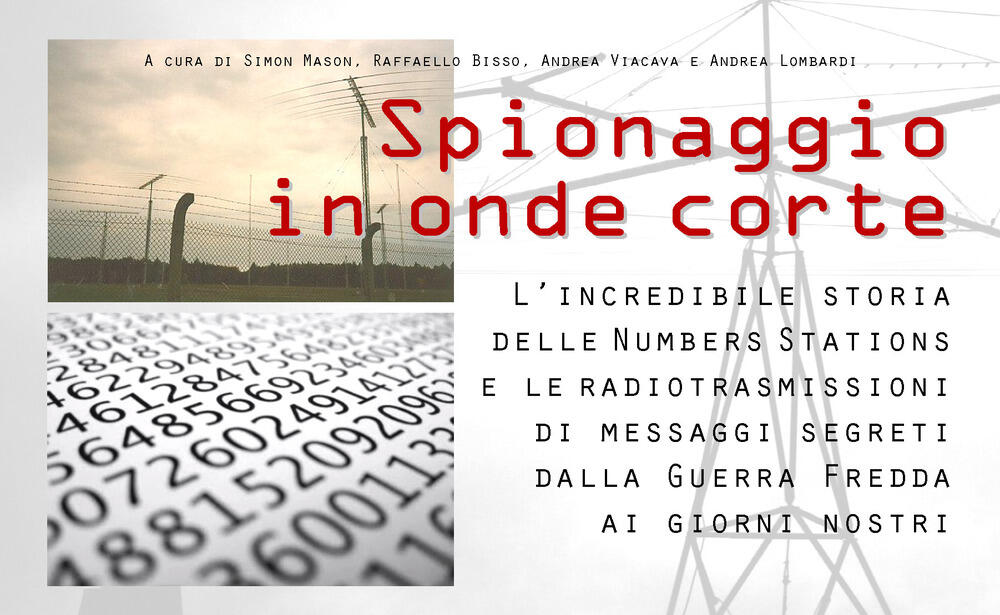
A cura di Simon Mason, Raffaello Bisso, Andrea Viacava e Andrea Lombardi
Spionaggio in onde corte
L’incredibile storia delle Numbers Stations e delle radiotrasmissioni di messaggi segreti dalla Guerra Fredda ai giorni nostri
Le cosiddette Numbers Stations sono delle trasmissioni radio in onde corte, in onda nelle più diverse ore del giorno, e con durate variabili, reperibili su molte frequenze e osservate e studiate ormai da decenni dai radioamatori di tutto il mondo. Queste trasmissioni misteriose, consistenti in voci che leggono gruppi di numeri o di lettere in alfabeto fonetico internazionale, o da segnali in codice morse o impulsi sonori, sono precedute spesso da “avvisi” di inizio trasmissione consistenti in brevi brani musicali, sequenze di lettere o scale di note, ciclicamente ripetuti a orari prefissati. Diversi studi, condotti indipendentemente da esperti di telecomunicazioni, hanno concluso che queste trasmissioni erano - e sono tuttora - impiegate da numerosi servizi per trasmettere dei brevi messaggi di testo ai loro agenti sotto copertura, operanti in altre nazioni. Le origini di questo metodo di trasmissione risalgono alla prima guerra mondiale, quando fu impiegato da parte dell’Austria Imperial Regia, mentre durante la seconda guerra mondiale fu la BBC a essere coinvolta nell’invio di radiomessaggi in codice - tramite la lettura alla radio di serie di frasi convenzionali - ai propri agenti del SOE (Special Operations Executive) e alle forze della Resistenza in vigore nei paesi occupati dalla Wehrmacht. Successivamente, negli anni della Guerra Fredda, questa tecnica di trasmissione fu usata abitualmente, con decine di Numbers Stations in onde corte usate dalla CIA statunitense, il KGB russo, il BND tedesco occidentale, l’StB cecoslovacco, l’MfS tedesco orientale, il MOSSAD israeliano… quello delle Numbers Stations fu uno dei segreti più gelosamente custoditi della Guerra Fredda se tutti questi governi, con un solo paio di eccezioni, hanno sempre negato per anni ogni legame con esse. Dopo la caduta del muro di Berlino nel 1989, queste trasmissioni subirono una sensibile diminuzione. Ma negli ultimi anni, altre trasmissioni sono seguite all’emergere dei rispettivi nuovi attori geopolitici mondiali, cosicché radioamatori e ricercatori possono tornare a riempire i loro taccuini di sequenze di numeri e lettere, adesso anche in cinese, indiano, coreano… e, con ogni probabilità, operazioni segrete e manovre di destabilizzazione saranno dettate ancora per molto tempo da aspre voci femminili, recitanti litanie di numeri nell’etere, tra lo statico di scariche elettromagnetiche e carillon distorti.
In allegato, un CD Audio con 25 rare registrazioni di Numbers Stations.
F.to 14x21 orizzontale, 180 pagg., numerose ill. b/n fuori testo, Euro 26,00
Spese di spedizione gratis con versamento sul Conto Corrente Postale N° 8857864 IBAN: IT-22-D-07601-01400-000008857864 intestato “ITALIA Storica” o con Paypal.
Un libro della Collana OFF TOPIC - ITALIA Storica
INFO e Ordini: E-Mail ars_italia@hotmail.com – Tel. 348 6708340